
Use Eheyciga dog stairs by matching their height to your bed, stabilizing them, and training your dog gradually. Start with short supervised sessions, then reward calm climbing until your dog uses the stairs confidently. The Eheyciga Dog Stairs for Bed can reduce repeated jumping onto elevated furniture. This matters because jumping can place extra stress on canine joints. Studies report joint level osteoarthritis rates around 36% to 57% among dogs older than eight. Therefore, proper stair setup can support safer daily movement for suitable dogs.
Key Takeaways
- Measure your bed before placing the stairs beside it.
- Match the stair height with your mattress height.
- Allow compressed foam to expand fully before use.
- Keep the stairs firmly against the bed frame.
- Use treats to teach climbing without forcing your dog.
- Watch every session until your dog moves confidently.
Start With the Right Stair Height
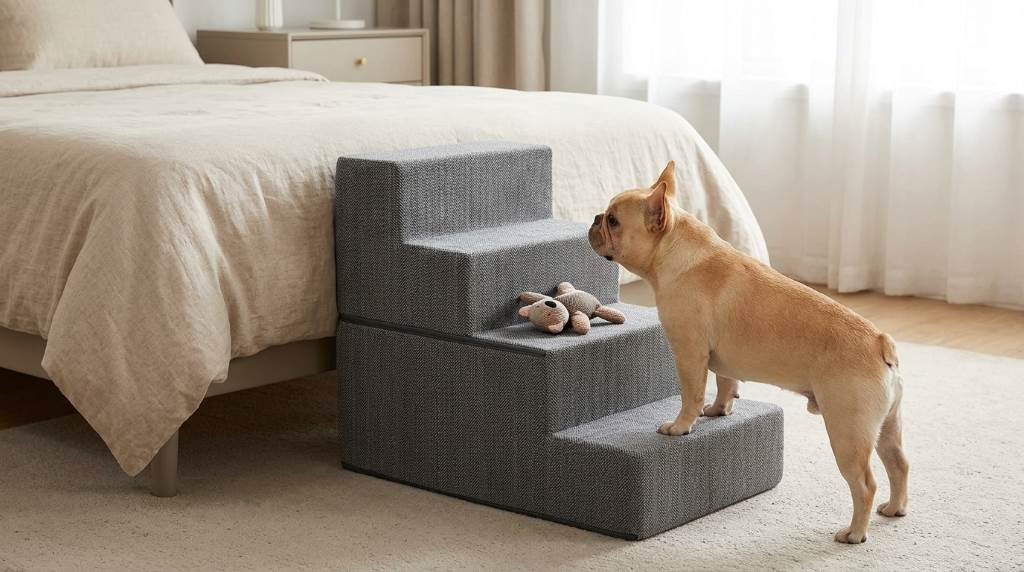
The first step involves matching the stairs to your actual bed height. Measure from the floor to the top sleeping surface. Then compare that measurement with your EHEYCIGA stair model.
EHEYCIGA offers different step configurations for different furniture heights. For example, some models reach about 13.5, 18, or 22.5 inches. Therefore, avoid selecting stairs based only on appearance or step count.
Measure the Bed Before Setup
Place the measuring tape on the floor beside the bed. Measure vertically to the top of the mattress rather than the bed frame.
Next, check where the highest stair will meet the mattress. A large height difference can force your dog to make an awkward final jump. Ideally, your dog should step smoothly from the highest stair onto the mattress.
Prepare the Stairs Before Your Dog Uses Them
Many EHEYCIGA models arrive compressed for packaging and shipping. Give the foam enough time to regain its intended shape before allowing your dog to climb.
Depending on the model, full expansion can take 24 to 48 hours. Meanwhile, keep the stairs away from moisture, chewing, and heavy objects that could distort the foam.
Check Every Structural Component
Inspect the cover, foam, support boards, and connecting sections before the first session. Make sure each component sits correctly inside its intended position.
For models with removable support boards, insert each board fully into its pocket. Then close the cover securely and check every seam before placing the stairs beside your bed.
Keep the Surface Clean
A clean stair surface helps maintain traction and keeps the sleeping area hygienic. Follow the care instructions for your specific cover before washing it.
Never assume the inner foam has the same cleaning requirements as the removable cover. Protect the foam from unnecessary moisture and allow washed fabric to dry completely.
Position the Stairs Correctly Beside the Bed
Place the stairs directly against the bed edge where your dog normally climbs. Avoid leaving a gap between the highest step and the mattress.
Also, place the stairs on a level floor with enough surrounding space. Your dog needs room to approach the first step without turning sharply.
Test Stability Before Training
Press down on each step with your hand before your dog approaches. Check for rocking, sliding, folding, or uneven contact with the floor.
If the stairs move, reposition them before continuing. A stable setup gives your dog a predictable path and reduces hesitation during training.
Consider the Floor Type
Hard floors can allow pet stairs to slide during repeated use. Place the unit where its bottom surface maintains strong contact with the floor.
If movement continues, consider a suitable nonslip floor mat underneath. Keep the mat flat so it does not create another tripping point.
Teach Your Dog to Use the First Step
Do not place your dog on the top step and expect immediate confidence. Instead, introduce the stairs as a familiar object first.
Let your dog sniff the stairs and walk around them freely. Reward calm investigation with a small treat or verbal praise.
Use Positive Reinforcement
Place one treat near the first step and allow your dog to approach voluntarily. Once your dog touches the step, reward the behavior immediately.
Next, place another treat slightly higher. Continue this process until your dog climbs several steps without hesitation.
Keep each training session short and relaxed. Several brief sessions usually create better learning than one long session.
Teach the Full Route to the Bed
Once your dog accepts the lower steps, gradually extend the training toward the mattress. Keep your body nearby without blocking the climbing path.
Reward steady movement rather than speed. Your goal involves controlled climbing, not racing toward the bed.
Practice Going Down Too
Many owners focus only on helping their dog reach the bed. However, descending requires equal attention because dogs must control their body weight differently.
Start by rewarding your dog for placing the front paws onto the first lower step. Continue rewarding each controlled movement toward the floor.
Stay beside the stairs during early practice. If your dog jumps from a high step, reduce the training distance and repeat more slowly.
Make the Bedside Route Easy to Understand
Dogs learn faster when their environment stays predictable. Keep the stairs in the same position during the first several days.
Avoid moving furniture around the training area while your dog learns. Consistent placement helps your dog remember the route between the floor and bed.
Use a Consistent Cue
Choose one simple verbal cue such as “stairs” or “up.” Say the cue calmly before your dog begins climbing.
Use the same cue when your dog comes down. Over time, your dog can associate the word with the complete stair route.
Know When Stairs May Not Suit Your Dog
Dog stairs can help suitable pets, but they do not fit every mobility situation. Dogs with serious joint, back, balance, or neurological problems may need another solution.
A ramp can provide a gentler incline for some dogs. Ask your veterinarian whether stairs or a ramp better suits your dog’s physical condition.
Watch for Warning Signs
Pay attention if your dog suddenly avoids the stairs after previously using them. Hesitation can sometimes signal pain, weakness, poor traction, or changing vision.
Also watch for slipping, limping, trembling, repeated pauses, or unusual vocalization. Stop training when your dog shows obvious discomfort and seek veterinary guidance.
Improve Safety During Nighttime Use
Many dogs use bedside stairs during nighttime hours. Therefore, keep the route clear from shoes, blankets, toys, and other obstacles.
Good visibility also helps dogs judge each step. Consider gentle room lighting if your dog struggles to see the stair edges at night.
Prevent Unsupervised Problems
Watch your dog closely during the first few nights. Some dogs climb confidently upward but move too quickly when returning to the floor.
If your dog repeatedly jumps from the side, pause unsupervised access. Retrain the descent until your dog follows the intended route.
Use the Stairs for More Than Bed Access
EHEYCIGA stairs can also help some dogs reach sofas and other elevated furniture. However, check the model height before moving the unit.
A stair configuration suitable for your bed may not fit a lower sofa correctly. Recheck the height whenever you move the stairs to another location.
Keep the Same Safety Routine
Every location needs the same basic checks. Confirm the height, floor stability, step condition, and available landing space.
Also, inspect the stairs regularly for damaged covers or displaced support components. Replace or repair worn parts before continued use.
Common Mistakes to Avoid
- Using stairs that sit too low or high for the bed.
- Allowing compressed foam to remain partially expanded.
- Placing stairs on a slippery or uneven surface.
- Leaving a gap between the stairs and mattress.
- Forcing a nervous dog onto the upper steps.
- Rewarding fast jumping instead of controlled movement.
- Ignoring sudden hesitation or changes in mobility.
- Moving the stairs repeatedly during early training.
How to Know Your Dog Has Learned
Your dog should approach the stairs without repeated encouragement. Next, your dog should climb each step with steady movement and controlled body position.
Successful training also includes the descent. Your dog should return to the floor without jumping from high steps or losing balance.
Look for Confidence Instead of Speed
A confident dog does not need to rush toward the bed. Smooth movement matters more than completing the climb quickly.
Therefore, keep rewarding calm behavior even after your dog learns the route. This reinforces the habit without creating unnecessary excitement.
When to Recheck the Setup
Recheck the stairs whenever you change the mattress, bed frame, or bedroom layout. Even small height changes can affect the final step.
Also inspect the stairs after heavy daily use. Foam, covers, and support components can change over time, so regular checks protect your dog’s routine.
Frequently Asked Questions
How long should EHEYCIGA dog stairs expand before use?
Allow compressed foam to fully expand according to your model instructions, commonly within 24 to 48 hours.
How do I stop my dog from jumping off the stairs?
Slow the training down, reward controlled descent, and supervise your dog until the complete route becomes familiar.
Should EHEYCIGA stairs touch the bed?
Yes, position the highest step securely against the bed edge to reduce the need for a final jump.
Can older dogs use EHEYCIGA dog stairs?
Some older dogs can use them safely, but dogs with significant mobility problems may need a veterinarian approved ramp.
Why does my dog refuse the stairs after using them?
Check stability, traction, lighting, stair height, and possible discomfort before continuing normal use.
Final Thoughts
Using EHEYCIGA dog stairs correctly involves more than placing them beside your bed. Measure carefully, prepare the foam, stabilize the unit, and teach each step gradually.
Most importantly, observe how your dog moves rather than assuming the equipment solves every mobility problem. Set up the stairs today, practice calmly, and adjust the routine whenever your dog’s comfort changes.