
Use Loves Cabin dog stairs by assembling each section securely, placing the steps flush against the bed, and training your dog gradually. The 3 step model measures about 17.7 inches high and supports up to 200 pounds, making setup and correct positioning especially important. Loves Cabin Dog Stairs for Bed can help reduce repeated jumping while giving your dog a more controlled route onto and off the bed. Start with short training sessions, reward calm movement, and supervise your dog until stair use becomes consistent.
Key Takeaways
- Measure your bed height before positioning the stairs.
- Assemble and connect every stair section securely before use.
- Place the top step close enough to create an easy transition.
- Train your dog with treats instead of forcing movement.
- Practice both climbing up and walking down the stairs.
- Inspect the fabric, steps, zippers, and base regularly.
- Consider a ramp when stairs do not suit your dog’s mobility.
Start With the Correct Bed Height
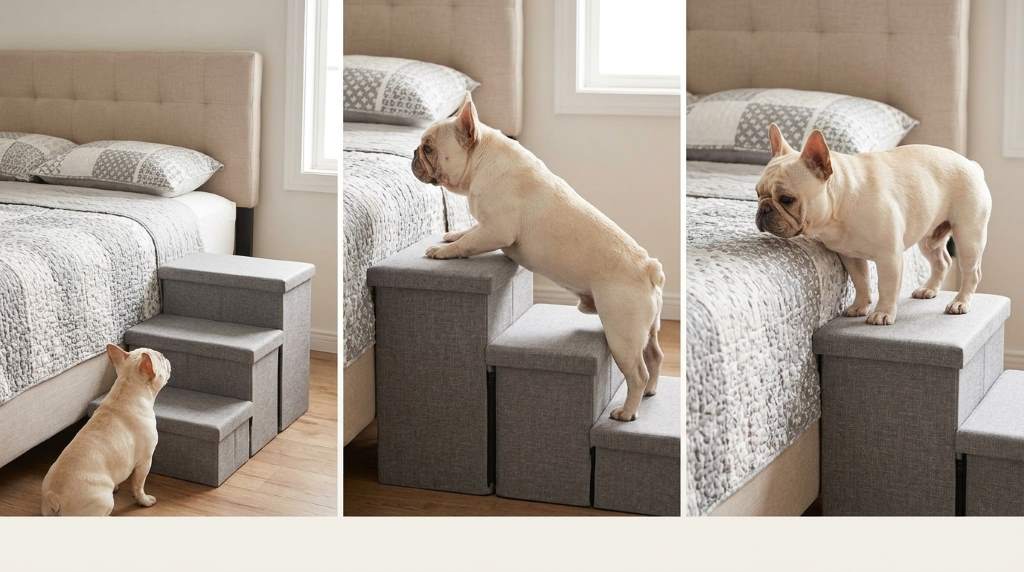
First, measure from the floor to the top surface of your mattress. Then compare that measurement with the stair height and your dog’s natural stepping ability.
A three step Love’s Cabin model stands around 17.7 inches high. Therefore, it can work particularly well with lower beds, couches, and similar elevated furniture.
However, mattress thickness changes the final distance considerably. A thick mattress can create a higher transition, so check the actual sleeping surface rather than the bed frame.
Check the Landing Area
Measure the floor area beside your bed before assembling the stairs. Leave enough surrounding space for your dog to approach without turning sharply.
Also remove loose rugs, cords, shoes, and other objects around the bottom step. A clear landing area helps your dog focus on climbing instead of avoiding obstacles.
Assemble the Stairs Correctly
Love’s Cabin dog stairs use separate sections that connect together with zippers. Follow the supplied assembly instructions and ensure every section sits squarely before placing the unit beside your bed.
Next, check that the bottom support sits completely flat. Then confirm that connected sections do not separate, twist, or shift when you apply gentle hand pressure.
The stairs also use a foldable design, which makes storage convenient between uses. Nevertheless, always unfold and reconnect the unit fully before your dog climbs.
Use the Storage Compartments Wisely
Each step can provide storage space, which gives the structure an additional household function. You can store lightweight dog blankets, leashes, toys, or grooming supplies inside.
However, avoid placing loose objects where they can shift during climbing. Organized contents can also add useful stability when the compartments allow secure storage.
Do not use sharp, heavy, leaking, or fragile objects inside the steps. Keep treats sealed because food odors may encourage unnecessary scratching or investigation.
Position the Stairs Beside the Bed
Place the stairs directly beside the area where your dog normally climbs onto the mattress. Keep the upper step close to the mattress edge without creating an awkward gap.
Then stand beside the stairs and gently test their stability. Walk around the unit and check whether the base moves across your flooring.
Hard flooring deserves particular attention because smooth surfaces can allow furniture to slide. The non-slip base helps, but proper placement still matters for everyday safety.
Find the Most Natural Entry Point
Watch how your dog approaches the bed without using the stairs. Some dogs naturally approach from the footboard, while others prefer a side position.
Position the stairs where your dog already wants to climb. This simple adjustment can make training considerably easier because you change less of the dog’s routine.
Introduce Your Dog to the First Step
Do not immediately expect your dog to climb all the way to the bed. Instead, allow your dog to inspect the stairs, sniff them, and walk around them.
Place a favorite treat near the bottom step after your dog shows calm interest. Reward investigation without requiring your dog to climb.
Next, place another treat on the first step. Use a relaxed voice and allow your dog to decide whether to move forward.
Build Confidence One Step at a Time
Once your dog accepts the first step, reward movement onto the second step. Continue gradually until your dog reaches the mattress without hesitation.
Keep each session short and positive. Several brief sessions usually create better learning opportunities than one long training session.
Never pull your dog upward by the collar or physically push the dog onto the stairs. Forced movement can create fear and make future training harder.
Teach the Downward Route Separately
Many owners focus on getting their dogs onto the bed and forget the return journey. Your dog also needs to learn how to descend each step slowly.
Start with your dog standing safely on the mattress. Place a treat on the highest stair and reward the first controlled step downward.
Continue placing rewards along the route until your dog reaches the floor. Keep yourself beside the stairs during early sessions.
Prevent Jumping Over Steps
Some dogs may attempt to skip steps because they want to reach the floor quickly. Reward deliberate foot placement rather than fast movement.
If your dog jumps from the middle step, move the reward closer to the next lower step. This encourages a controlled sequence instead of a leap.
With repetition, your dog should learn that the stairs provide a predictable path. Continue occasional rewards until the behavior becomes routine.
Make the Stairs Comfortable for Your Dog
The stair surface should give your dog’s paws enough traction during every movement. Watch closely during the first sessions for sliding, hesitation, or repeated paw repositioning.
Padding can make each step more comfortable, especially for dogs that dislike hard surfaces. Still, comfort cannot compensate for poor positioning or an unstable base.
Keep the stair surface clean and dry. Remove hair, dirt, crumbs, and moisture that could affect traction over time.
Consider Your Dog’s Physical Needs
Small dogs may struggle with tall individual steps, even when the overall structure fits the bed. Senior dogs may also need extra time to understand the movement.
Dogs with back problems, joint limitations, poor balance, or recent injuries need more careful consideration. A veterinarian can help determine whether stairs or a ramp better suits your dog.
For dogs with significant mobility limitations, do not assume a high weight capacity means the product fits their physical needs. Structural strength and canine mobility involve different considerations.
Use the Stairs Safely Every Night
Keep the route between the bed and stairs clear throughout the night. Dogs often climb when owners are asleep, so nighttime obstacles deserve particular attention.
Also avoid placing the stairs on unstable objects to increase their height. The entire structure should remain on the floor and support itself as designed.
Supervise your dog during the first several nights. Once your dog consistently climbs and descends without hesitation, routine supervision can become less intensive.
Inspect the Structure Regularly
Check the connecting zippers and seams periodically for visible damage. Examine each step for unusual movement, deformation, or damage to its covering.
Also inspect the bottom surface for dirt or anything that could reduce floor contact. Clean the unit according to the manufacturer’s care instructions.
Stop use if you notice significant structural damage. Repair or replace damaged components before allowing your dog to climb again.
Troubleshoot Common Problems
| Problem | Likely Cause | Practical Fix |
|---|---|---|
| Dog refuses the stairs | Unfamiliar texture or height | Start with treats beside the bottom step. |
| Dog jumps from the bed | Downward route feels unfamiliar | Practice descending separately. |
| Stairs move slightly | Smooth flooring or poor positioning | Reposition the base and clear the landing area. |
| Dog skips steps | Reward placement encourages speed | Reward each controlled step instead. |
| Dog hesitates at the top | Mattress transition feels difficult | Move the stairs closer to the mattress edge. |
| Dog loses interest | Training sessions run too long | Use shorter sessions with better rewards. |
When Stairs May Not Be the Right Solution
Stairs work well when a dog can comfortably lift each paw and maintain balance. However, some dogs need a gradual incline rather than individual steps.
A ramp may suit dogs with significant joint stiffness, weakness, or certain back conditions. Your veterinarian can help you assess the safest access method.
Likewise, very high beds can create an awkward transition even when the stairs appear sturdy. In that situation, reassess the furniture height and access route instead of forcing the setup.
Build a Reliable Bedtime Routine
Consistency can make stair training much easier. Use the same route, keep the stairs in the same position, and reward calm climbing during the early learning period.
Before bedtime, clear the floor and check that the stairs remain correctly positioned. Then encourage your dog to use the stairs rather than lifting the dog onto the bed.
Over time, the stairs can become part of your dog’s normal bedtime routine. That familiarity can reduce hesitation and encourage independent movement.
Final Safety Checklist
- Measure the mattress height before installation.
- Place the stairs on a stable, level floor.
- Connect every section securely.
- Keep the landing area free from clutter.
- Train upward and downward movement separately.
- Reward controlled steps instead of jumping.
- Inspect zippers, seams, fabric, and the base regularly.
- Ask a veterinarian about stairs for dogs with mobility concerns.
Conclusion
Using Love’s Cabin dog stairs correctly requires more than placing them beside the bed. Measure the setup, assemble every section securely, position the stairs carefully, and teach your dog each movement gradually.
Start today by measuring your mattress height and creating a clear landing area. Then introduce the first step with calm rewards and build toward confident independent bed access.
FAQs
Are Love’s Cabin dog stairs easy to assemble?
Yes, the sections connect with zippers, and the foldable construction makes setup and storage relatively straightforward.
How high are Love’s Cabin dog stairs?
The commonly listed three step model measures approximately 17.7 inches high.
Can large dogs use Love’s Cabin stairs?
The commonly listed model supports up to 200 pounds, but individual dogs still need suitable step dimensions and mobility.
How can I teach my dog to use the stairs?
Introduce one step at a time and reward calm movement with treats, praise, or another preferred reward.
Should my dog use stairs after an injury?
Ask your veterinarian first because the safest access method depends on the injury, recovery stage, and dog’s mobility.