
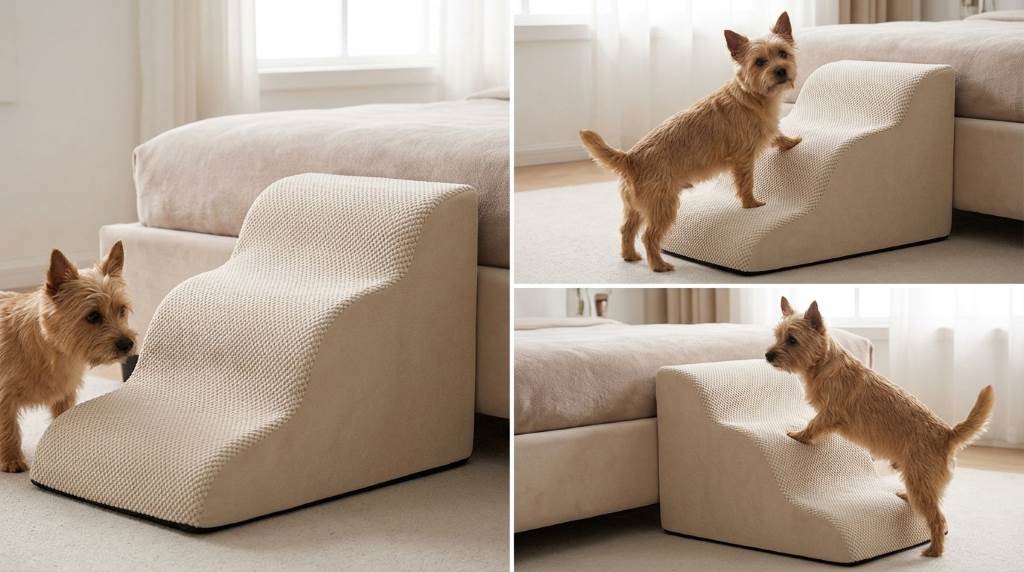
Aodisman dog stairs help small dogs reach couches and beds without repeated jumping. To use them safely, place the stairs firmly against the furniture, then teach your dog to climb one step at a time using treats and praise. Aodisman Dog Stairs for Small Dogs can make daily access easier when you match the stair height to your furniture. Many current Aodisman models use three, four, or five steps, while some designs reach roughly 24 inches. The right setup depends on your dog’s size, confidence, stride, and the height of the destination.
Key Takeaways
- Measure your furniture before placing the stairs.
- Keep every step stable before allowing your dog to climb.
- Use treats to teach gradual, confident movement.
- Start training beside the stairs rather than forcing your dog upward.
- Watch your dog’s paws, posture, and confidence during use.
- Clean the removable cover regularly to maintain traction and hygiene.
Start With the Right Stair Position
First, place the Aodisman stairs directly beside the couch or bed. The highest step should sit close enough to the furniture for an easy final transition. Avoid leaving a wide gap between the top step and mattress or cushion.
Next, check the floor underneath the stairs before introducing your dog. Hardwood, tile, and polished surfaces can allow movement during climbing. Therefore, add a nonslip mat underneath when the stairs shift during normal use.
Measure the Furniture Height
Measure from the floor to the top surface where your dog wants to climb. Then compare that measurement with your specific Aodisman model. Do not assume every three step, four step, or five step version reaches the same height.
Also consider the width of the available floor area. Your dog needs enough space to approach the first step naturally. A cramped position can make even a suitable stairway difficult to use.
Prepare the Stairs Before Training
Some foam pet stairs arrive compressed for shipping and need time to regain their intended shape. Follow the product instructions before allowing your dog to use them. In particular, inspect every step after expansion and confirm that the structure looks even.
Then check the outer cover for proper placement. A loose or twisted cover can affect traction and make your dog hesitate. Smooth the fabric across every step before starting training.
Check Stability From Every Angle
Push the stairs gently from the front and sides. They should remain steady instead of sliding or tipping. If movement occurs, reposition them or place a suitable nonslip surface underneath.
Afterward, inspect the top connection with the furniture. The stairs should create a predictable route without an awkward final jump. This simple check can prevent many avoidable training problems.
Teach Your Small Dog to Use the Stairs
Training works best when you introduce the stairs gradually. Start with your dog standing near the lowest step. Place a small treat on the first step and allow your dog to investigate.
Once your dog places one paw on the step, reward calmly. Next, encourage two paws onto the first step before offering another reward. Continue this process until your dog moves forward without hesitation.
Use a Step by Step Training Method
- Place the stairs securely beside the furniture.
- Let your dog sniff and inspect the stairs.
- Reward your dog for approaching the first step.
- Encourage one step at a time with small treats.
- Reward your dog after reaching the top.
- Practice the downward route separately.
- Reduce treats gradually once the behavior becomes reliable.
Keep each practice session short and relaxed. Small dogs can become cautious when unfamiliar surfaces move under their paws. Therefore, several brief sessions often work better than one long lesson.
Teach Both Upward and Downward Movement
Many owners focus only on getting their dog onto the furniture. However, your dog also needs to learn how to descend safely. Downward movement requires careful foot placement and can feel more intimidating than climbing.
Stand beside the stairs during early downward practice. Encourage your dog toward each lower step without pulling the collar or leash. Reward controlled movement instead of speed.
Watch the Final Step
The lowest step deserves special attention because dogs often accelerate toward the floor. Keep the landing area clear of toys, bowls, furniture edges, and other obstacles. Then reward your dog after reaching the floor calmly.
Likewise, watch the transition from the highest step to the bed or couch. A large height difference can encourage jumping. If your dog repeatedly launches from the top, reconsider the stair height or placement.
Help Nervous Dogs Build Confidence
Some small dogs immediately investigate new stairs, while others avoid them. Never drag a nervous dog onto the steps. Instead, reward curiosity and let your dog approach at a comfortable pace.
Begin with rewards near the base rather than placing treats far above. Gradually move each reward upward as confidence improves. This method creates a positive association without overwhelming your dog.
Make the Surface Feel Familiar
Your dog may hesitate because the stairs feel different from the floor. Let your dog stand beside them and sniff the fabric before training. You can also place a familiar blanket nearby during the first session.
However, avoid covering the walking surface with loose material. Loose fabric can shift underneath small paws. Stable traction matters more than adding extra softness.
Use the Stairs for Different Furniture Heights
Aodisman offers stair configurations intended for different furniture heights. Therefore, select the version that matches the destination rather than simply choosing the model with the most steps. More steps do not automatically create a better setup.
For a lower couch, fewer steps may provide a practical route. For a taller bed, additional steps can reduce the height between individual movements. Always verify your specific model’s dimensions before making a final placement.
Consider Your Dog’s Body Shape
Body shape matters when you evaluate climbing comfort. Short legged dogs may need shallower movement between steps than dogs with longer legs. Likewise, long backed breeds may benefit from a gradual route instead of repeated jumping.
Watch how your dog bends and pushes through each step. Smooth movement usually looks controlled rather than rushed. If your dog repeatedly slips, stops, or jumps between steps, adjust the setup.
Prevent Common Safety Problems
Dog stairs should support controlled movement, not encourage reckless climbing. Keep the surrounding area clear and remove objects that could cause a stumble. Also supervise initial sessions until your dog consistently uses the route.
- Do not place stairs on a slippery surface without added traction.
- Do not allow damaged foam or loose covers to remain in use.
- Do not force a frightened dog onto the stairs.
- Do not position the stairs where the top step creates a large gap.
- Do not leave clutter around the landing areas.
- Do not assume a familiar dog needs no safety checks.
Regular inspection also matters because foam and fabric can change with repeated use. Check the steps for compression, shifting, tears, and loose seams. Replace or repair the setup when damage affects stability or traction.
Keep Aodisman Dog Stairs Clean
Small dogs often spend considerable time around couches and beds, so the stairs can collect hair and dust. Vacuum the fabric regularly to remove loose debris. Clean spills promptly before moisture reaches the inner foam.
If your model has a removable cover, follow its specific washing instructions. Avoid soaking the foam unless the manufacturer explicitly permits it. After cleaning, make sure the cover dries completely before returning the stairs to service.
Check Traction After Cleaning
Cleaning can change how fabric feels under your dog’s paws. Therefore, inspect the cover after every wash and reinstall it correctly. Make sure wrinkles do not create raised areas across the walking surface.
Also check the underside before returning the stairs to their normal position. A clean floor does not guarantee adequate traction. Test the entire setup again before allowing unrestricted use.
Troubleshoot Common Climbing Problems
My Dog Refuses to Use the Stairs
Start training from the floor and reward every small interaction. Then increase the challenge gradually as your dog becomes comfortable. Avoid placing your dog directly on the top step.
My Dog Jumps From the Top
Move the stairs closer to the furniture and practice the final transition slowly. Reward your dog for stepping onto the furniture instead of jumping. If the gap remains awkward, reassess the stair height and position.
The Stairs Slide Across the Floor
Reposition the stairs on a more stable surface and test their movement again. A properly sized nonslip mat can provide additional grip. Continue supervised use until the stairs remain reliably stable.
My Dog Climbs but Looks Uncomfortable
Observe your dog’s posture, paw placement, and movement speed during each trip. Then reduce the training difficulty and reassess the stair configuration. Persistent discomfort warrants advice from a qualified veterinarian.
Build the Stairs Into Your Dog’s Daily Routine
Consistency makes the stairs easier to understand. Keep them in the same location when your dog regularly uses the couch or bed. This predictable arrangement helps your dog recognize the route without repeated prompting.
Reward independent use during the early stages. Later, reduce treats while continuing verbal praise. Eventually, the stairs can become a normal part of your dog’s daily movement routine.
When to Use Extra Supervision
Supervise dogs that remain hesitant, unstable, or easily distracted around the stairs. Puppies may also need closer observation because they can rush without judging distances carefully. Senior dogs may require slower training and more frequent stability checks.
Furthermore, dogs with existing mobility concerns may need a different access solution. A veterinarian can help determine whether stairs or a ramp better suits the dog’s movement needs. Never use pet stairs as a substitute for professional care when pain or weakness appears.
What Makes a Good Setup Work
| Setup Factor | What to Check |
|---|---|
| Height | Match the stair height with the couch or bed. |
| Stability | Confirm the stairs stay firmly positioned during use. |
| Traction | Check both the walking surface and floor underneath. |
| Approach | Leave enough floor space for a natural first step. |
| Landing | Keep the top and bottom areas clear. |
| Training | Use gradual rewards instead of forcing movement. |
Why Gradual Training Matters
The biggest mistake involves treating dog stairs like ordinary household furniture. Your dog must understand that the stairs provide a safe route rather than another obstacle. Therefore, training should teach both confidence and controlled movement.
Positive reinforcement also gives you useful information. If your dog repeatedly refuses a certain step, investigate the reason instead of increasing pressure. The problem could involve height, traction, positioning, confidence, or physical comfort.
Final Checklist Before Everyday Use
- Confirm the stairs match your furniture height.
- Make sure every step keeps its intended shape.
- Check the cover for wrinkles and loose sections.
- Test the base for sliding before each early session.
- Keep the approach and landing areas clear.
- Practice both climbing and descending.
- Monitor your dog’s confidence during independent use.
Once these checks become routine, Aodisman dog stairs can provide a practical path between the floor and favorite furniture. Start slowly, keep the setup stable, and let your dog develop confidence through repetition. Take a few minutes today to measure your furniture, position the stairs correctly, and begin positive training.
Frequently Asked Questions
Are Aodisman dog stairs suitable for small dogs?
Yes, Aodisman offers pet stair designs intended for small dogs, but you should match the model to your dog’s size and furniture height.
How do I teach my dog to use Aodisman stairs?
Use small treats and praise to reward your dog for approaching, stepping onto, climbing, and descending the stairs.
How do I stop dog stairs from sliding?
Place the stairs on a stable surface and add a suitable nonslip mat underneath when movement occurs.
Should my dog use the stairs without supervision?
Supervise initial training and continue supervision when your dog remains nervous, unstable, or inexperienced.
How often should I clean dog stairs?
Vacuum them regularly and clean the removable cover according to the manufacturer’s care instructions.