
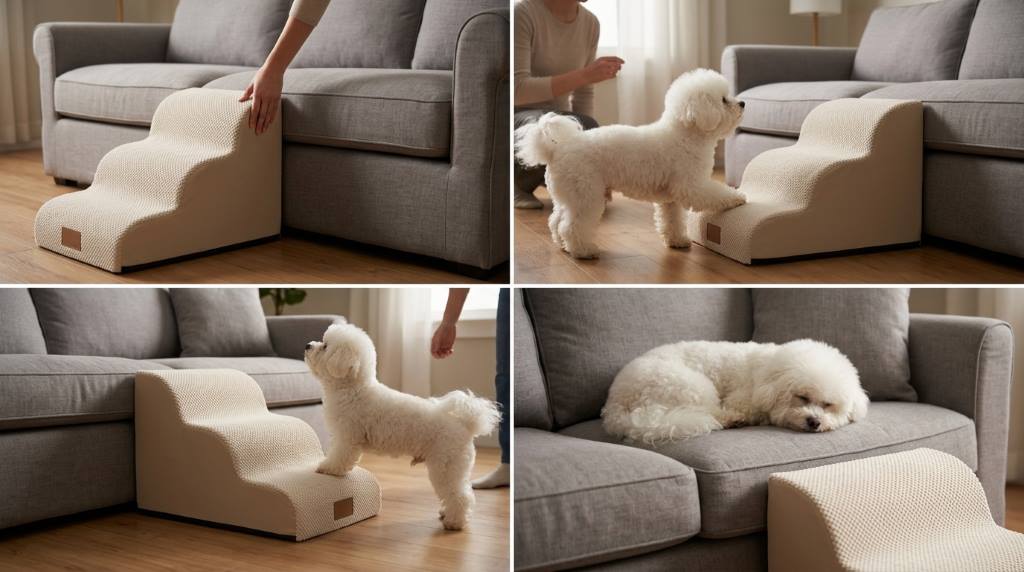
Use Cozy Kiss dog stairs beside the couch, stabilize the base, and teach your dog one step at a time. The right setup reduces jumping and gives your dog a controlled path onto and off the sofa.
About one in five dogs develops arthritis, making everyday jumping harder for many older pets. Small breeds, senior dogs, and pets with mobility concerns can especially benefit from easier furniture access.
If you use Cozy Kiss Dog Stairs for Couch, focus on placement, traction, training, and supervision. These details matter more than simply putting the stairs beside your furniture.
Key Takeaways
- Measure your couch height before placing the stairs beside it.
- Keep every step fully supported by a stable floor surface.
- Train your dog gradually instead of forcing movement.
- Reward calm climbing and controlled descent with treats.
- Check the stairs regularly for movement, wear, moisture, or damage.
- Consider a ramp when stairs do not suit your dog’s mobility.
Why Dog Stairs Help With Couch Access
Jumping onto a couch creates a sudden impact that stairs can help reduce. A gradual climb also gives your dog more control during the descent.
This matters even more when your dog hesitates before jumping or moves differently than usual. Such changes can sometimes indicate discomfort, so monitor behavior instead of assuming age causes every change.
Senior dogs often lose strength, balance, or traction as they age. Therefore, a stable access route can make a familiar living room easier to use.
Prepare the Couch Area Before Use
Measure the Couch Height
Start by measuring from the floor to the top surface your dog will reach. Then compare that measurement with the stair height and step arrangement.
The final step should meet the couch naturally without creating a large vertical gap. A poor height match can make climbing awkward and encourage your dog to jump.
Clear the Landing Area
Remove toys, blankets, tables, and other objects around the stairs. Your dog needs enough space to approach, climb, turn, and step onto the couch.
Also check the area below the couch edge for hazards. Sharp furniture corners and clutter can turn a simple climb into an avoidable accident.
Check the Floor Surface
Place the stairs on a firm surface that does not move easily under pressure. Hard flooring can become slippery, especially when your dog lands with momentum.
If the floor lacks traction, add a suitable nonslip mat beneath the stairs. However, make sure the mat stays flat and does not create another tripping point.
Set Up Cozy Kiss Stairs Correctly
Place the stairs directly against the couch whenever the design allows it. Keep the top step close enough that your dog can transfer without stretching or jumping.
Many Cozy Kiss models use foam construction, textured covers, and nonslip bases. These features can support comfortable climbing, but correct placement still determines overall stability.
Check the stairs from the side before letting your dog use them. Look for rocking, gaps, uneven flooring, or an unstable connection with the couch.
| Setup Check | What to Look For |
|---|---|
| Couch height | Top step should provide an easy transfer |
| Floor stability | Base should remain steady during movement |
| Step surface | Dog should have secure paw contact |
| Landing space | Couch area should remain clear |
| Approach path | Dog should reach the stairs without obstacles |
Teach Your Dog to Use the Stairs
Start With Exploration
Let your dog inspect the stairs before asking for any movement. Allow sniffing and gentle investigation without pulling your dog toward the steps.
Next, place a small treat near the first step. Reward calm curiosity so the stairs become familiar rather than threatening.
Build One Step at a Time
Place another treat on the first step once your dog approaches comfortably. Reward your dog immediately after placing the front paws there.
Then repeat the process with the next step. Gradual progress helps nervous dogs understand that climbing remains safe and predictable.
Practice the Descent Separately
Many dogs learn to climb upward faster than they learn to come down. Therefore, spend dedicated practice time teaching controlled downward movement.
Stand beside the stairs while your dog descends. Reward each calm step instead of encouraging your dog to rush toward the floor.
Use Rewards Without Creating Dependence
Treats can make stair training easier, especially during the first few sessions. However, avoid placing treats only at the final destination.
Instead, reward individual behaviors such as approaching, stepping, pausing, climbing, and descending. Gradually reduce treats once your dog consistently uses the stairs.
You can then switch to praise, gentle attention, or a favorite toy. This approach helps your dog learn the behavior rather than simply following food.
Make Couch Access Safer for Small Dogs
Small dogs often face a larger relative height difference when they jump onto furniture. Their short legs can make repeated couch jumping particularly demanding.
Position the stairs where your dog naturally approaches the couch. Avoid placing them around a corner if your dog needs to make a sharp turn before climbing.
Also watch how your dog exits the couch. A dog that ignores the stairs and leaps down may need additional training or a different setup.
Support Senior and Mobility Limited Dogs
Senior dogs may need more time to understand new equipment. Keep sessions short, calm, and predictable rather than expecting immediate independent use.
Watch for stiffness, hesitation, limping, unusual posture, or reluctance to climb. If these signs appear suddenly, discuss them with your veterinarian.
Dogs with significant mobility problems may need a ramp instead of stairs. A ramp can provide a more gradual route when repeated stepping remains difficult.
Keep the Stairs Stable During Daily Use
Check the stairs whenever you move them between rooms. Even a small shift can change the angle between the top step and couch.
Inspect the base after energetic play or repeated climbing. If the stairs slide, rotate, collapse, or lose their shape, stop use until you resolve the problem.
Keep the approach area free from loose rugs when they bunch beneath the stairs. A flat, stable surface gives your dog a more predictable starting point.
Clean and Maintain the Stairs
Pet stairs collect fur, dirt, saliva, and occasional food particles during normal use. Regular cleaning helps maintain the surface your dog’s paws contact.
Follow the care instructions for your specific Cozy Kiss model. Removable covers may require different care from the foam interior.
Never soak foam components unless the manufacturer specifically permits that method. Excess moisture can remain inside the material and create odor or drying problems.
Watch for These Common Problems
Your Dog Refuses to Use the Stairs
Fear, unfamiliar texture, poor placement, or excessive step height can cause refusal. Move slowly and return to simple exploration instead of forcing the dog upward.
Place the stairs near a favorite resting area and reward voluntary interaction. If hesitation continues, test whether another stair shape or ramp works better.
The Stairs Move During Climbing
Movement usually points to a floor, placement, or traction problem. Recheck the base and surrounding surface before allowing another climb.
Never solve instability by encouraging faster climbing. A dog needs predictable footing to learn controlled movement.
Your Dog Jumps From the Top
Some dogs reach the top and immediately leap onto the couch. Keep training sessions slow and reward a controlled transfer.
You can also position yourself beside the couch during early practice. Your presence can discourage sudden launches while reinforcing the correct movement.
Your Dog Jumps Down Instead
Downward jumping can undermine the purpose of the stairs. Guide your dog toward the first step and reward each controlled descent.
Repeat short sessions until your dog naturally approaches the stairs when leaving the couch. Consistency matters more than long training sessions.
When Stairs May Not Be the Right Solution
Dog stairs do not suit every dog or every couch. A ramp may work better for dogs with severe joint pain, weakness, poor balance, or certain back problems.
Likewise, a very large dog may require a wider mobility aid. Always follow your veterinarian’s guidance when a dog has an injury, surgery recovery, or diagnosed orthopedic condition.
Never treat stairs as a substitute for medical evaluation. They provide environmental support, but they cannot diagnose or manage an underlying condition.
A Simple Daily Routine for Safe Couch Access
- Check the stairs before your dog uses them.
- Confirm the base remains stable and properly aligned.
- Keep the approach path clear.
- Let your dog climb without rushing.
- Watch the descent, especially after sleeping.
- Clean visible dirt or fur when needed.
- Inspect the stairs regularly for wear or deformation.
This routine takes only a few minutes but helps catch problems early. More importantly, it keeps stair use consistent throughout your dog’s daily routine.
How to Make the Training More Effective
Use the same verbal cue whenever you invite your dog onto the stairs. Consistent language helps your dog connect the cue with the expected movement.
Keep practice sessions brief when introducing the stairs. Several calm repetitions usually work better than one exhausting training session.
Most importantly, allow your dog to control the pace. Confidence grows when the dog can investigate, pause, and continue without pressure.
What Makes a Good Couch Stair Setup?
A good setup creates a smooth transition between floor and couch. It also gives your dog enough traction, space, and confidence to move independently.
The best arrangement depends on your dog’s size, mobility, confidence, and the couch itself. Therefore, judge the setup by your dog’s actual movement rather than appearance alone.
| Factor | Good Setup | Warning Sign |
|---|---|---|
| Placement | Stairs sit firmly against couch | Visible gap or shifting |
| Movement | Dog climbs calmly | Dog rushes or jumps |
| Traction | Paws stay secure | Sliding or hesitation |
| Confidence | Dog approaches willingly | Dog avoids the stairs |
| Maintenance | Clean and intact surfaces | Damage or persistent moisture |
Frequently Asked Questions
Can I put Cozy Kiss dog stairs directly against my couch?
Yes, placing the stairs firmly against the couch usually creates the shortest and easiest transition.
How do I teach my dog to use Cozy Kiss stairs?
Introduce the stairs gradually and reward your dog for calmly completing each step.
Are Cozy Kiss stairs suitable for senior dogs?
They can help senior dogs with couch access, provided the dog can safely manage the steps.
Why does my dog avoid the stairs?
Your dog may dislike the texture, height, movement, placement, or unfamiliar equipment.
Should my dog use stairs or a ramp?
Stairs can suit agile dogs, while ramps may better suit dogs needing a gentler incline.
Final Thoughts
Using Cozy Kiss stairs correctly involves more than placing them beside the couch. Stable positioning, gradual training, secure footing, and controlled descent create the safest routine.
Start with short practice sessions and observe how your dog moves. Then adjust placement or equipment when your dog’s behavior shows discomfort or uncertainty.
Set up the stairs today, practice one step at a time, and make couch access easier for your dog. If your pet shows pain or sudden mobility changes, contact your veterinarian before continuing.