Choosing the right toys for your dog does much more than provide entertainment. Studies show that mental stimulation can reduce unwanted canine behaviors by up to 30%, while regular play improves physical health and emotional well-being. If you are searching for the best dog toys, understanding your dog’s age, size, personality, and chewing habits is essential. This comprehensive guide explains how to select safe, durable, and engaging dog toys that support your pet’s overall health in the USA and beyond.
Why Choosing the Right Dog Toys Matters
Dog toys support physical exercise, mental stimulation, and emotional comfort. They also help prevent boredom-related behaviors.
Additionally, the right toys encourage healthy chewing habits. As a result, dogs become more active and emotionally balanced.
Many pet owners buy toys based only on appearance. However, selecting toys according to your dog’s needs produces better outcomes.
Understand Your Dog’s Age Before Buying Toys
Dogs require different toys during each stage of life. Therefore, age should always influence your purchasing decisions.
Puppies
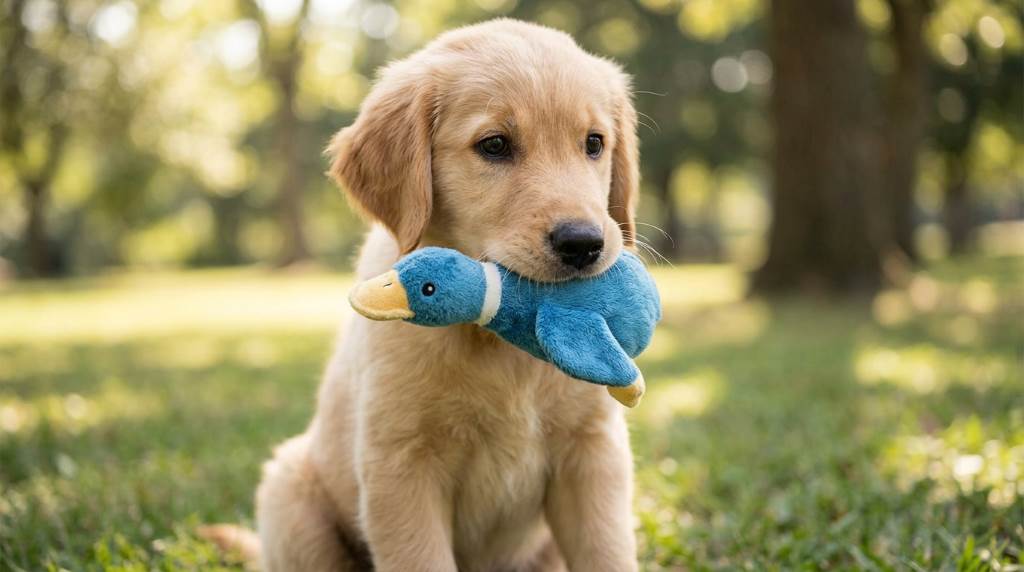
Puppies experience teething discomfort and need softer materials. Rubber chew toys and teething rings work particularly well.
Interactive toys also support cognitive development. Consequently, puppies learn problem-solving skills through play.
Adult Dogs
Adult dogs benefit from durable toys that promote physical activity. Fetch toys, puzzle toys, and chew toys are excellent choices.
Because adult dogs have established habits, selecting toys that match their personality becomes easier.
Senior Dogs
Senior dogs often experience dental sensitivity and reduced mobility. Therefore, softer toys with gentle textures provide better comfort.
Lightweight interactive toys can also encourage regular movement. This approach supports healthy aging.
Consider Your Dog’s Size and Breed
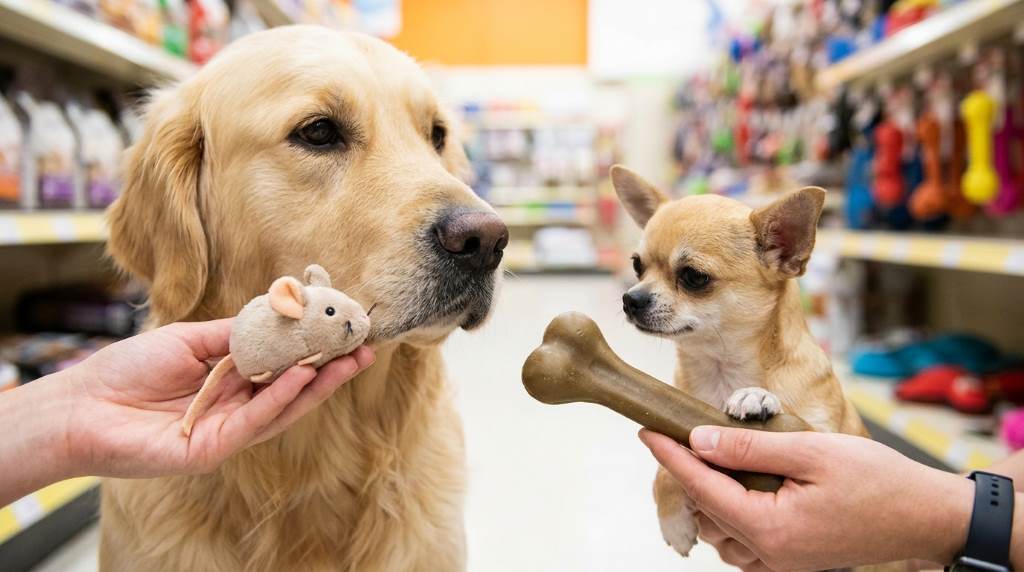
Size plays a critical role when selecting dog toys. Small toys may become choking hazards for larger breeds.
Likewise, oversized toys can frustrate smaller dogs. Choosing an appropriately sized toy improves safety and enjoyment.
- Small breeds: Lightweight plush and rubber toys
- Medium breeds: Interactive puzzles and fetch toys
- Large breeds: Heavy-duty chew toys and durable balls
- Giant breeds: Extra-strength toys designed for aggressive chewers
Breed characteristics also influence play preferences. Herding breeds often enjoy puzzle toys, while retrievers prefer fetch activities.
Evaluate Your Dog’s Chewing Style
Every dog chews differently. Understanding chewing behavior helps prevent toy destruction and potential injuries.
Gentle Chewers
Gentle chewers typically enjoy plush toys and soft rubber products. These dogs rarely damage toys quickly.
Moderate Chewers
Moderate chewers require balanced durability and comfort. Reinforced rubber toys often provide excellent performance.
Aggressive Chewers
Aggressive chewers need specially designed heavy-duty toys. Otherwise, broken pieces may create safety risks.
Look for products labeled specifically for power chewers. These options usually last significantly longer.
Choose Safe Materials
Safety should always remain the highest priority. Some low-quality materials may contain harmful chemicals.
Choose toys made from natural rubber, food-grade silicone, or certified pet-safe materials. These materials provide better protection.
Avoid toys with loose parts, sharp edges, or easily detachable pieces. Such components increase choking hazards.
Explore Different Types of Dog Toys
Different toy categories serve different purposes. Therefore, creating variety improves your dog’s overall experience.
Chew Toys
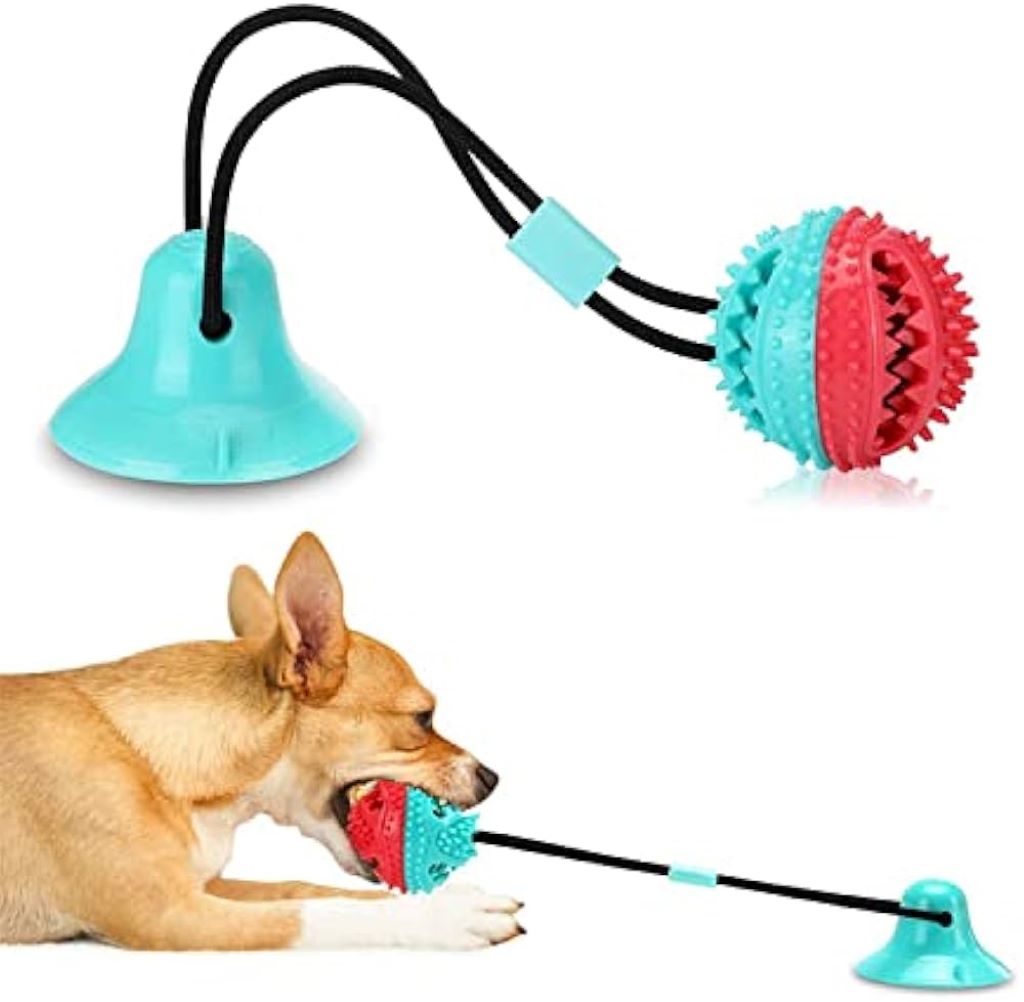
Chew toys support dental health and reduce destructive chewing behaviors. They also satisfy natural instincts.
Durable rubber chew toys remain among the most popular options across the USA.
Interactive Puzzle Toys
Puzzle toys challenge your dog’s brain while providing rewards. Consequently, they help reduce boredom and anxiety.
Many veterinarians recommend puzzle toys for high-energy breeds. Mental exercise can be as important as physical activity.
Fetch Toys
Fetch toys encourage exercise and strengthen owner-dog relationships. Balls, discs, and launch toys work particularly well.
Outdoor activities also support cardiovascular health. Therefore, fetch toys offer multiple benefits.
Plush Toys
Plush toys provide emotional comfort and gentle play opportunities. Many dogs enjoy carrying them around the house.
However, aggressive chewers should avoid standard plush toys. Reinforced versions offer better durability.
Tug Toys
Tug toys promote interactive play and strengthen bonding. They also help dogs release excess energy.
Choose tug toys made from durable rope or reinforced materials. This improves safety during play sessions.
Match Toys to Your Dog’s Personality
Every dog has a unique personality and play style. Therefore, observing behavior patterns helps identify ideal toys.
- Energetic dogs prefer active toys and fetch games
- Curious dogs enjoy puzzle challenges
- Comfort-seeking dogs favor plush toys
- Strong chewers require durable chew products
Experimenting with multiple toy categories can reveal your dog’s preferences. This process often improves long-term satisfaction.
Pay Attention to Durability Ratings
Manufacturers frequently classify toys according to durability levels. Reviewing these ratings helps prevent unnecessary purchases.
Premium toys often cost more initially. However, they frequently provide better value over time.
Reading verified customer reviews can also reveal real-world durability performance. This information supports smarter buying decisions.
Rotate Dog Toys Regularly
Dogs can lose interest in familiar toys over time. Rotating toys helps maintain excitement and engagement.
Store several toys and introduce different options weekly. This strategy creates novelty without additional spending.
Additionally, rotation reduces wear and extends toy lifespan. Therefore, pet owners save money while increasing enrichment.
Know When to Replace Dog Toys
Damaged toys present significant safety risks. Regular inspection helps identify potential hazards early.
Replace toys immediately if you notice cracks, tears, loose pieces, or excessive wear. Prevention remains the safest approach.
Even durable toys eventually require replacement. Monitoring toy condition protects your dog’s health.
Common Mistakes to Avoid When Buying Dog Toys
- Buying toys based only on appearance
- Ignoring size recommendations
- Choosing unsafe materials
- Overlooking chewing habits
- Purchasing toys without reading reviews
- Keeping damaged toys too long
Avoiding these mistakes improves safety and increases satisfaction. Consequently, both owners and dogs benefit.
Choose the Best Dog Toys for Long-Term Happiness
Selecting the right dog toys requires understanding your pet’s age, size, personality, and chewing habits. Safe materials and durable construction should always remain priorities.
By choosing appropriate toys and rotating them regularly, you can improve your dog’s physical health, mental stimulation, and emotional well-being. Start evaluating your dog’s unique needs today and invest in toys that provide lasting happiness and enrichment.
Frequently Asked Questions
What are the safest materials for dog toys?
Natural rubber, food-grade silicone, and certified pet-safe materials are generally the safest choices.
How often should I replace dog toys?
You should replace dog toys immediately when they show significant wear or damage.
Are puzzle toys good for dogs?
Yes, puzzle toys improve mental stimulation and help reduce boredom.
Can puppies use the same toys as adult dogs?
No, puppies require softer toys designed specifically for teething and development.
How many toys should a dog have?
Most dogs benefit from having five to ten rotating toys available.