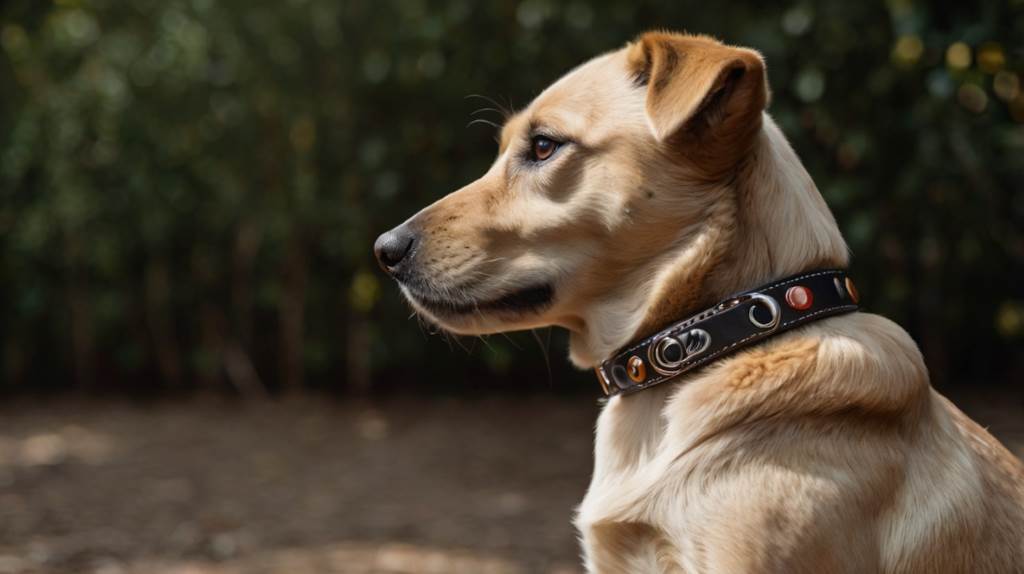
Yes, you can use a bark collar more safely when you pair it with reward based training. Start by finding the barking trigger, then teach a quiet behavior before introducing any collar. A 2016 study found excessive barking in 47.1% of surveyed dogs. Another recent study found barking remained the most reported unwanted behavior among young dogs. For many owners, Dog bark collars may seem like a quick solution. However, safe training focuses on teaching better responses rather than simply stopping vocalization.
Understand Why Your Dog Barks First
Dogs bark for many normal reasons, including excitement, fear, frustration, boredom, and alerting. Therefore, you should identify the trigger before using any training device. The same barking sound can represent very different emotional states in different situations. AKC guidance also recommends finding the reason behind barking before selecting a control method.
Watch your dog closely for several days and record each barking episode. Note the time, location, trigger, duration, and your dog’s body language. Also record what happened immediately before and after the barking. This simple log can reveal patterns that you might otherwise miss.
Common Barking Triggers
- People walking past windows or fences
- Other dogs barking nearby
- Doorbells, visitors, or household sounds
- Excitement during play or walks
- Boredom and insufficient daily activity
- Fear, anxiety, or unfamiliar situations
- Attention seeking behavior
- Discomfort or possible health problems
Once you know the trigger, you can build a training plan around that situation. For example, window barking may improve after you block the dog’s visual access. Meanwhile, boredom barking may require more exercise and mental stimulation.
Decide Whether a Bark Collar Fits the Situation
A bark collar should not replace basic obedience training or behavior modification. Instead, consider it only as one part of a broader training plan. The device should never become the only way your dog learns to stay quiet.
Some collars use vibration, while others use spray or electronic stimulation. These methods interrupt barking differently, but they can also create unwanted associations. AKC notes that punishment based approaches can harm welfare and may not outperform positive reinforcement methods.
For that reason, avoid using a shock based collar without professional guidance. Never use a device to punish barking caused by fear, panic, or separation anxiety. Those problems require attention to the underlying emotional cause.
When You Should Avoid a Bark Collar
- Your dog shows strong fear around the barking trigger
- Your dog experiences separation related distress
- Your dog becomes aggressive after corrections
- You cannot identify the reason for barking
- Several dogs share the same household
- Your dog shows signs of pain or illness
- A veterinarian or behavior professional advises against it
In multi dog homes, accurate bark detection becomes especially important. Otherwise, one dog’s barking can trigger a correction on another dog. AKC specifically warns about this problem with bark control devices.
Teach Quiet Behavior Before Using the Device
Start training when your dog remains calm and relaxed. Ask for a simple behavior such as sitting, looking at you, or lying on a mat. Reward that behavior immediately with a small, valuable treat.
Next, introduce a mild version of the barking trigger from a safe distance. The goal involves keeping your dog below the point where barking becomes intense. When your dog notices the trigger without barking, reward that calm response.
Gradually increase the trigger’s intensity as your dog improves. If barking becomes frantic, increase the distance and lower the difficulty again. This approach helps your dog learn what behavior earns rewards.
Teach a Reliable Quiet Cue
First, allow your dog to give one or two natural barks. Then calmly say a cue such as “quiet” and wait for silence. The moment your dog stops barking, deliver a treat and praise the calm response.
Repeat this exercise during short sessions throughout the week. Eventually, your dog should understand that quiet behavior produces something valuable. AKC recommends rewarding silence and gradually extending the quiet period before giving another reward.
Introduce the Collar Without Creating Fear
Do not immediately place a bark collar on your dog and activate it. Instead, let your dog inspect the collar while it remains inactive. Reward calm investigation so the collar becomes a neutral object.
Over several sessions, place the inactive collar on your dog for short periods. Continue normal activities while providing treats and praise. Watch closely for signs of discomfort, stress, or unusual behavior.
Never force the collar onto a frightened dog. If your dog freezes, hides, scratches at the collar, or becomes unusually tense, remove it. Then return to basic positive reinforcement training.
Check the Collar Fit
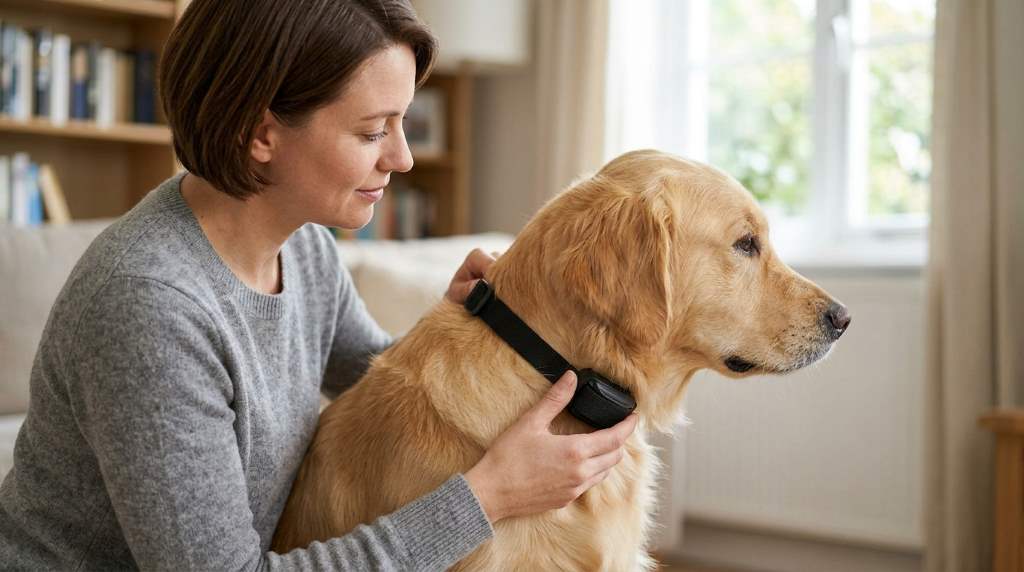
A poorly fitted collar can create discomfort and may also affect detection accuracy. Follow the manufacturer’s fitting instructions carefully before beginning any training session. AKC advises proper fitting for vibration collars and recommends avoiding continuous collar use.
Check the skin and coat around the contact area regularly. Look for redness, rubbing, swelling, or irritation after each session. Stop using the collar if you notice any physical reaction.
Pair the Collar With Positive Reinforcement
The safest training goal involves teaching your dog what to do instead of barking. Therefore, reward behaviors that cannot happen at the same time as barking. Examples include looking at you, going to a mat, sitting, or carrying a toy.
Suppose your dog barks whenever someone approaches the front door. Teach your dog to move toward a mat when the doorbell rings. Then reward the dog for staying on the mat while the visitor enters.
This replacement behavior gives your dog a clear task. It also reduces the uncertainty that often drives repeated barking. Over time, your dog can learn that visitors predict rewards rather than stressful interruptions.
Use High Value Rewards
Use small treats that your dog genuinely enjoys during difficult training situations. Save ordinary treats for easier exercises and stronger rewards for challenging triggers. Keep portions small so repeated training does not create unnecessary calorie intake.
However, food should not remain the only reward forever. Add praise, play, toys, access to outdoor areas, or permission to sniff. This variety helps your dog respond reliably across different environments.
Keep Training Sessions Short and Controlled
Long sessions can increase frustration and reduce your dog’s ability to learn. Instead, use several short sessions throughout the day. End each session after your dog performs the desired behavior successfully.
Begin with quiet environments before moving into distracting areas. For example, practice inside your home before training near a busy sidewalk. Gradual progress usually creates better results than sudden exposure to intense triggers.
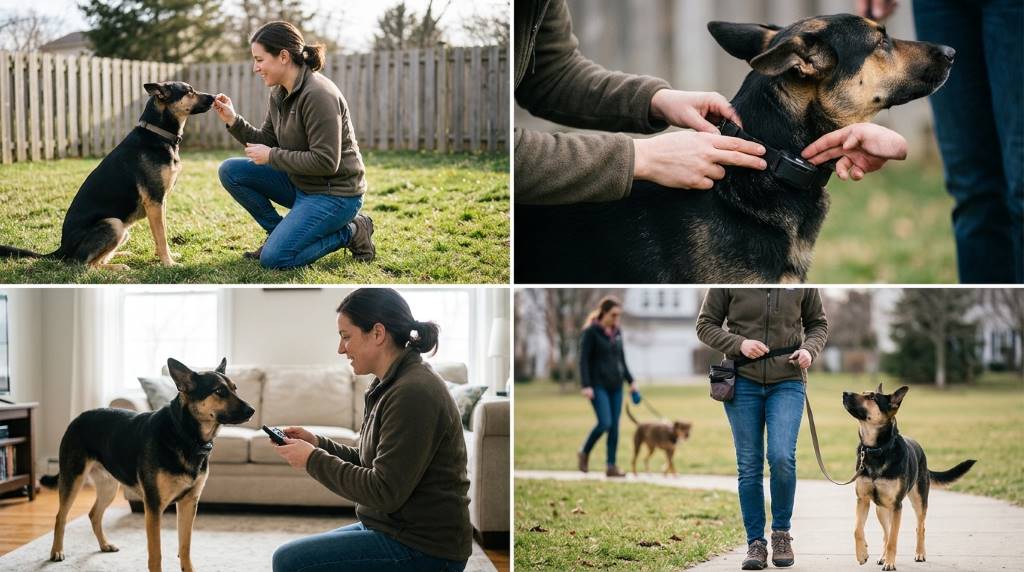
Follow a Simple Training Sequence
- Identify the barking trigger.
- Measure your dog’s reaction from a safe distance.
- Teach an alternative calm behavior.
- Reward quiet responses immediately.
- Introduce the collar while inactive.
- Continue reward based training during collar use.
- Increase distractions gradually.
- Reduce collar dependence as behavior improves.
This sequence keeps the training focused on learning rather than punishment. It also gives you measurable steps for tracking improvement. Keep a simple weekly record of barking frequency, trigger intensity, and successful quiet responses.
Know the Warning Signs During Training
Your dog may communicate discomfort through subtle changes in body language. Watch for lip licking, yawning, freezing, tucked posture, avoidance, trembling, or sudden withdrawal. These signs can indicate that the training situation has become too difficult.
Also watch for increased aggression, frantic behavior, or unusual sensitivity around the neck. Stop the session if these behaviors appear. Then consult a veterinarian or qualified behavior professional before continuing.
Do not assume that silence always means successful training. A frightened dog may stop barking because it feels unable to respond. Safe training should produce relaxed body language and improved confidence, not simply quietness.
Address the Cause Outside Training Sessions
Daily management can reduce barking opportunities while formal training continues. Close curtains when outside movement triggers repeated barking. Provide puzzle toys, sniffing activities, exercise, and structured play when boredom contributes to vocalization.
For dogs that bark when left alone, investigate separation related behavior instead of relying on a bark collar. A camera can help you understand what happens after you leave. Persistent distress may require veterinary assessment and professional behavior support.
Likewise, sudden changes in barking deserve attention. Pain, sensory changes, illness, or age related changes can affect vocal behavior. Contact your veterinarian when barking suddenly increases without an obvious environmental explanation.
Reduce Collar Dependence Over Time
A bark collar should not become your dog’s permanent teacher. Once your dog responds reliably to verbal cues, gradually create more training situations without the device. Continue rewarding calm behavior so the learned response remains strong.
Start by removing the collar during quiet indoor sessions. Later, practice around mild triggers without it. Finally, test the behavior around stronger triggers while maintaining enough distance for success.
Some dogs may remain quiet only while wearing a bark collar. AKC notes that dogs can associate the correction with the collar itself. Therefore, long term training should build a response that works without the device.
When Professional Help Makes Sense
Professional support can save time when barking involves fear, aggression, anxiety, or complex household triggers. Look for a qualified trainer who uses reward based methods and understands canine behavior. A veterinary behavior professional can also help when medical or serious behavioral factors may contribute.
Bring your barking log to the appointment whenever possible. Videos can also help professionals understand the trigger and your dog’s response. Detailed records often make behavior assessments more accurate and practical.
Questions to Ask a Trainer
- What causes my dog’s barking?
- What alternative behavior should I teach?
- How can I reduce the trigger?
- How will we measure progress?
- What signs mean I should stop?
- How can we phase out the collar?
A good trainer should explain the learning process clearly. They should also respect your dog’s emotional state throughout training. Avoid anyone who recommends escalating corrections without identifying the barking trigger.
Build a Safer Long Term Training Plan
Successful bark training depends on consistency more than intensity. Everyone in the household should use the same verbal cues and reward rules. Otherwise, inconsistent responses can accidentally reinforce unwanted barking.
Set realistic goals for your dog’s behavior. You usually want fewer unnecessary barks and faster recovery, not complete silence. Remember that barking remains a normal form of canine communication.
Keep rewarding calm behavior even after major improvement. Occasional reinforcement can maintain a learned response without requiring constant treats. Meanwhile, continue providing exercise, enrichment, rest, and predictable routines.
Conclusion
Safe bark collar training starts with understanding why your dog barks and teaching a better response. Use reward based methods, introduce equipment gradually, monitor your dog’s body language, and avoid punishment driven training.
Start today by recording your dog’s barking triggers and teaching one calm replacement behavior. If anxiety, aggression, pain, or persistent distress appears, contact a veterinarian or qualified behavior professional. With consistent training, you can reduce nuisance barking while protecting your dog’s comfort and trust.
FAQs
Are bark collars safe for dogs?
Bark collars require careful use, and reward based training should remain the main approach.
Should I use a shock bark collar?
Shock based bark collars can create welfare and behavior concerns, so seek professional guidance before considering one.
How long should my dog wear a bark collar?
Follow the manufacturer’s limits and avoid leaving a bark deterrent collar on your dog continuously.
Can a bark collar stop anxiety barking?
A bark collar does not address the underlying cause of anxiety and may worsen distress in some dogs.
How can I stop using a bark collar?
Gradually practice the same calm behaviors without the collar while continuing rewards and trigger management.