
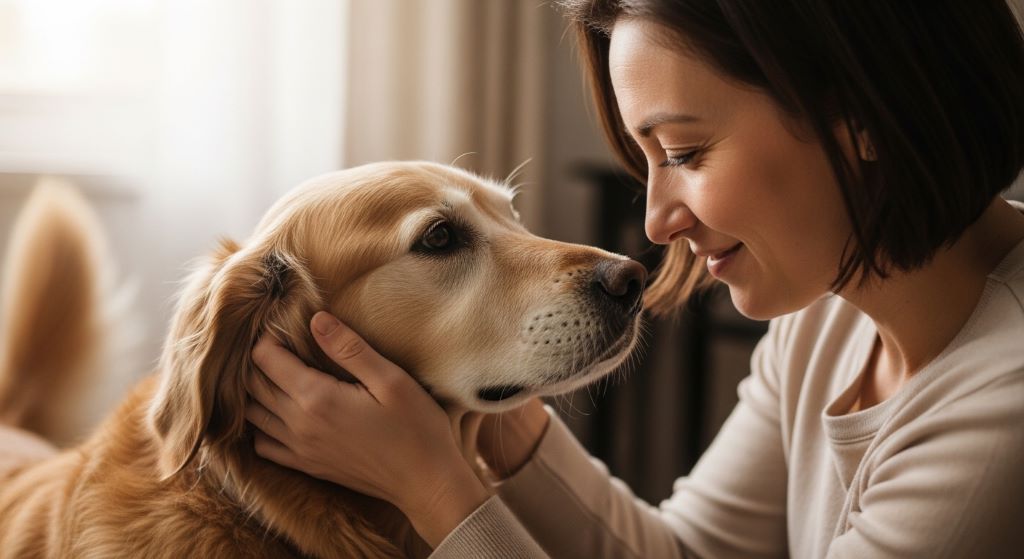
Dogs speak without making a sound. Every flick of an ear, wag of a tail, or shift in posture carries meaning. Learning to read these signals can change the way you connect with your dog. In fact, experts believe humans can learn to interpret 100 to 200 distinct silent cues from dogs. This article will help you unlock that language — one signal at a time.
Why Silent Communication Matters
Most people focus on what their dog does with sound — barking, whining, or growling. However, the bulk of a dog’s communication is completely silent. Dogs evolved alongside humans for over 15,000 years. During that time, they developed a remarkable ability to send and receive messages without a single bark.
Understanding this silent language helps you respond better to your dog’s needs. Additionally, it reduces stress for both of you. When a dog feels understood, it behaves more calmly. When you understand your dog, you worry less and connect more deeply.
This two-way, wordless exchange is what researchers call silent communication between dogs and humans. It is rich, layered, and entirely learnable.
Reading Your Dog’s Tail
The tail is one of the most expressive tools a dog has. Yet many people misread it. A wagging tail does not always mean a happy dog.
Here is what to look for:
- A high, stiff wag often signals alertness or tension.
- A low, loose wag usually means your dog is relaxed and friendly.
- A tucked tail signals fear or submission.
- A slow wag from a neutral position can mean your dog is unsure.
The speed, height, and direction of the wag all carry different messages. Therefore, you should always look at the whole tail movement, not just the motion itself. Research has even shown that dogs wag more to the right when they feel positive emotions and more to the left when they feel negative ones.
The Eyes Say Everything
Eye contact between dogs and humans is powerful. A soft, relaxed gaze from your dog is a sign of trust and affection. In contrast, a hard, unblinking stare can be a warning sign.
When your dog squints or blinks slowly at you, it is often a sign of calm contentment. You can even return this signal. Try slow blinking at your dog and watch how it responds. Many dogs will blink back or look away gently — both signs that they feel safe.
Additionally, watch the whites of your dog’s eyes. If you can see a lot of white around the iris, that is called “whale eye.” It often means your dog is anxious or uncomfortable. This is one of the most important stress signals to recognize early.
What Ears Can Tell You
A dog’s ears move constantly. They rotate, flatten, perk up, and tilt — all in response to the world around them. Learning to read ear position gives you real-time information about your dog’s emotional state.
Ears held forward and upright show focus and interest. Ears pinned flat against the head signal fear or submission. Ears slightly pulled back often show a dog that is relaxed and happy to see you. However, context always matters. A dog with naturally floppy ears may not show these positions as clearly, so you need to look at other body signals too.
Body Posture and Weight Shifts
A dog’s whole body tells a story. You just need to learn how to read it.
A dog leaning toward something is curious or interested. A dog leaning away or shifting its weight backward is uncomfortable or unsure. A dog that rolls onto its back with a relaxed, open belly is showing trust. However, a dog on its back with a tense body and stiff legs is actually in a defensive position.
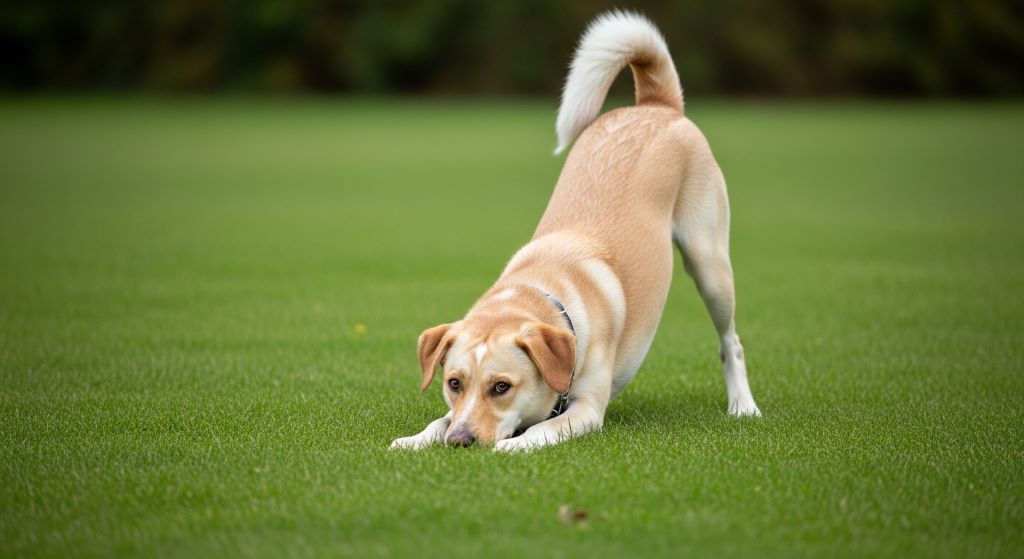
Play bows are one of the clearest and most joyful signals. When a dog stretches its front legs forward and lowers its chest while keeping its rear in the air, it is inviting play. This is a universally understood signal — even between dogs that have never met.
Therefore, before you approach or pet a dog, check its overall posture first. A relaxed body means a relaxed dog. A stiff or tense body means the dog needs more space.
Facial Expressions and Mouth Signals
Dogs have surprisingly expressive faces. A relaxed, slightly open mouth with a loose tongue signals a calm and happy dog. A closed, tight mouth can mean a dog is tense or focused. Yawning, in dogs, is rarely about tiredness. Instead, it is often a calming signal — a way of saying, “I am not a threat.”
Lip licking is another key signal. When a dog licks its lips quickly without food present, it is usually feeling anxious or uneasy. This is one of those easy-to-miss signals that, once you spot it, you will start noticing all the time.
Panting without physical exercise can also be a stress signal. Additionally, a pulled-back lip that shows teeth is a clear warning. Never ignore it. It means the dog has reached a limit and needs space immediately.
How Humans Communicate Silently Too
This exchange is not one-sided. Dogs are also reading you constantly. Your posture, eye contact, breathing, and movement all send signals to your dog.
Standing tall and moving confidently tells your dog you are calm and in control. Hunching over, moving erratically, or staring directly into a dog’s eyes can make a nervous dog even more anxious. Therefore, being aware of your own body language is just as important as reading your dog’s.
Slow, deliberate movements calm dogs. Quick or sudden movements can trigger excitement or fear. Even your breathing matters — dogs can sense tension in shallow, rapid breathing. When you slow your breath, your dog often calms down too.
Calming Signals — A Hidden Vocabulary
Norwegian dog trainer Turid Rugaas identified over 30 calming signals that dogs use to communicate peace and reduce tension. These form a core part of the silent vocabulary between dogs and humans.
Common calming signals include:
- Turning the head away
- Sniffing the ground
- Moving in a curve instead of a straight line
- Slow blinking
- Shaking off (like after a bath, but with no water involved)
- Sitting or lying down in a stressful moment
- Yawning
When you recognize these signals, you can respond in kind. For example, if a dog approaches you nervously, turn slightly sideways, avoid direct eye contact, and move slowly. This tells the dog you are not a threat. This kind of response can build trust faster than any treat.
Building a Two-Way Silent Dialogue
Once you start recognizing your dog’s signals, you can begin sending signals back. This is where real connection happens. Dogs notice everything you do, even when you think you are doing nothing.
Sit on the floor to get on your dog’s level — this is a calming, non-threatening posture. Move away when your dog seems overwhelmed — this shows respect for its boundaries. Mirror your dog’s calm energy — dogs are incredibly sensitive to emotional states.
Over time, you and your dog will develop your own shared language. Some signals will be unique to your relationship. A certain look from you might tell your dog it is time for a walk. A certain lean from your dog might tell you it needs reassurance. This is the beauty of learning silent communication — it grows richer the longer you practice it.
How to Practice Every Day
You do not need special training sessions to build this skill. Simply pay attention during everyday moments.
Watch your dog as it wakes up, plays, eats, and rests. Notice what changes when strangers arrive. Observe how your dog responds to different sounds. Keep a mental note of what signals appear before certain behaviors.
Additionally, video can be a helpful tool. Record a few minutes of your dog during different situations and watch it back slowly. You will notice signals you completely missed in real time.
The goal is to build a library of 100 to 200 recognized signals over time. Some will come quickly. Others will take months to spot. However, every signal you learn deepens your relationship with your dog.
Conclusion
Silent communication between dogs and humans is a rich and learnable language. Dogs express themselves through their tails, eyes, ears, posture, facial expressions, and dozens of subtle calming signals. Humans, in turn, send constant signals through their own body language, even without realizing it.
By learning to read your dog’s silent cues and becoming more aware of your own, you build a bond based on true understanding. You learn to respond before problems arise. You create a space where your dog feels safe, heard, and respected.
Start small. Pick one or two signals to focus on this week. Practice daily. Over time, you will move toward that 100 to 200 word silent vocabulary that transforms an ordinary relationship into an extraordinary one.
The conversation was always happening. Now you know how to listen.
Frequently Asked Questions
1. How many silent signals can a dog actually use? Experts estimate that dogs use anywhere from 30 to over 100 distinct body language signals. With close observation over time, humans can learn to recognize between 100 and 200 of these cues across different situations and dogs.
2. Can any dog owner learn to read dog body language? Yes. This is not a skill reserved for trainers or behaviorists. With patience and daily practice, any dog owner can learn to recognize the most important silent signals their dog uses.
3. What is the easiest silent signal to learn first? The play bow is one of the clearest and most recognizable signals. Start there, then move on to tail position and mouth signals, which are also fairly easy to spot once you know what to look for.
4. Do dogs understand human body language? Yes. Dogs are highly attuned to human posture, eye contact, movement speed, and emotional energy. Research shows they can even distinguish between happy and angry human facial expressions.
5. What should I do if I misread my dog’s signal? That is completely normal, especially at first. Simply give your dog space, stay calm, and observe more carefully next time. Dogs are forgiving and will keep communicating with you regardless of early mistakes.
Related Topics:
How to Remove Dog Dandruff Naturally at Home
Dog Hair Colour Dye: Transform Your Pet’s Look Safely