Large dogs bring big love, but they also come with big challenges, especially when it comes to travel, training, or simply keeping them safe at home. A flimsy crate won’t cut it for a powerful, energetic, or anxious large breed. That’s where a heavy-duty dog crate comes in. These crates are designed to withstand the strength and size of big dogs, providing a secure, durable space for rest, travel, or confinement.
I learned this the hard way when my 100-pound Labrador, Max, turned his first crate into a pile of bent metal and broken plastic within minutes. That’s when I realized I needed something far sturdier. After testing several options, I found a heavy-duty crate that could handle Max’s size and strength, giving me peace of mind and him a safe, comfortable space.
In this guide, I’ll help you understand what to look for in a heavy-duty dog crate so you can make the right choice for your large furry friend.
Why a Heavy-Duty Dog Crate is a Must for Large Breeds
Large dogs have unique needs that standard crates simply can’t meet. According to a study by the American Kennel Club, over 60% of large dog owners reported issues with standard crates, including escapes, damage, or discomfort for their pets. A heavy-duty crate addresses these problems by offering superior strength, durability, and security.
One of the biggest advantages of a heavy-duty crate is its ability to contain even the most determined escape artists. Large breeds like German Shepherds, Rottweilers, and Huskies are known for their strength and intelligence, which can make them expert crate escapers. A sturdy, well-constructed crate can prevent these escapes, keeping your dog safe and your home intact.
Additionally, heavy-duty crates provide a sense of security for anxious or stressed dogs. The sturdy construction and secure latches create a den-like environment that can help calm nervous pets. For more insights on the benefits of these crates, check out this guide on heavy duty dog crate options.
However, not all heavy-duty crates are created equal. Some may lack the necessary features to keep your dog comfortable or safe. Therefore, understanding the key features to look for is essential.
Key Features to Look For
When choosing a heavy-duty dog crate, the first feature to consider is the material. The most common materials for heavy-duty crates are steel, aluminum, and reinforced plastic. Steel crates are the strongest and most durable, making them ideal for large, powerful dogs. They’re resistant to chewing and bending, providing a secure space for even the most determined escape artists. However, steel crates can be heavy and may rust if not properly maintained.
Aluminum crates are another excellent option for large dogs. They’re lightweight yet strong, making them easier to transport than steel crates. Aluminum is also rust-resistant, which is a significant advantage for outdoor use or in humid climates. However, aluminum crates may not be as sturdy as steel crates and can be more expensive.
Reinforced plastic crates are a lighter, more portable option, but they may not be suitable for the strongest or most aggressive dogs. They’re often used for travel or temporary confinement and can be a good choice for dogs that are less likely to chew or scratch at their crate.
Next, pay attention to the crate’s construction. Look for crates with thick, sturdy bars or walls that can withstand your dog’s strength. Additionally, consider the spacing between the bars. For large dogs, the bars should be spaced closely enough to prevent their paws or heads from getting stuck but far enough apart to allow for adequate ventilation.
Finally, think about the crate’s latching mechanism. A secure, heavy-duty latch is essential to prevent escapes. Look for crates with multiple latches or locking systems for added security.
Types of Heavy-Duty Dog Crates
Heavy-duty dog crates come in various styles, each designed for specific needs and preferences. Understanding the different types can help you choose the best one for your large dog.
- Wire Crates: These are among the most popular heavy-duty crates due to their strength, durability, and ventilation. Wire crates are typically made from thick steel or aluminum bars, providing a secure and well-ventilated space for your dog. They’re also collapsible, making them easier to store and transport. However, wire crates may not be as cozy or den-like as other options, and some dogs may feel less secure in them.
- Solid Metal Crates: These crates are constructed from solid metal panels, providing maximum security and durability. They’re ideal for dogs that are prone to escaping or chewing on their crates. Solid metal crates are often used for travel or outdoor confinement, as they offer superior protection against the elements. However, they can be heavy and less portable than other options.
- Reinforced Plastic Crates: These crates are made from high-impact plastic with reinforced walls and doors. They’re lightweight and portable, making them a good choice for travel or temporary confinement. Reinforced plastic crates are also easy to clean and maintain. However, they may not be as sturdy or secure as metal crates and can be chewed through by determined dogs.
- Hybrid Crates: Some heavy-duty crates combine the best features of different materials, such as a steel frame with plastic or aluminum panels. These hybrid crates offer a balance of strength, durability, and portability, making them a versatile choice for various situations.
Size and Comfort for Large Dogs
Choosing the right size crate is crucial for your dog’s comfort and safety. A crate that is too small can be cramped and uncomfortable, while a crate that is too large may not provide the secure, den-like space that dogs instinctively seek. For large dogs, it’s especially important to ensure the crate is spacious enough to accommodate their size and strength.
To determine the right size crate for your dog, measure them from the tip of their nose to the base of their tail, and add 4-6 inches to determine the minimum length of the crate. Additionally, measure your dog’s height from the floor to the top of their head or ears, whichever is taller, and add 4-6 inches to determine the minimum height of the crate.
According to the American Kennel Club, the crate should be just large enough for your dog to stand up, turn around, and lie down comfortably. For large breeds, this often means a crate that is at least 36 to 48 inches in length, depending on the dog’s size.
Additionally, consider your dog’s weight and breed. Larger, heavier dogs may require a more sturdy and durable crate, while giant breeds like Great Danes or Mastiffs may need an extra-large crate to accommodate their size.
Finally, think about your dog’s comfort during extended periods in the crate. Look for crates with a comfortable, cushioned floor or add a soft bed or blanket to make the space more inviting. Additionally, consider crates with a removable, washable liner for easy cleaning and maintenance.
Durability and Security Features
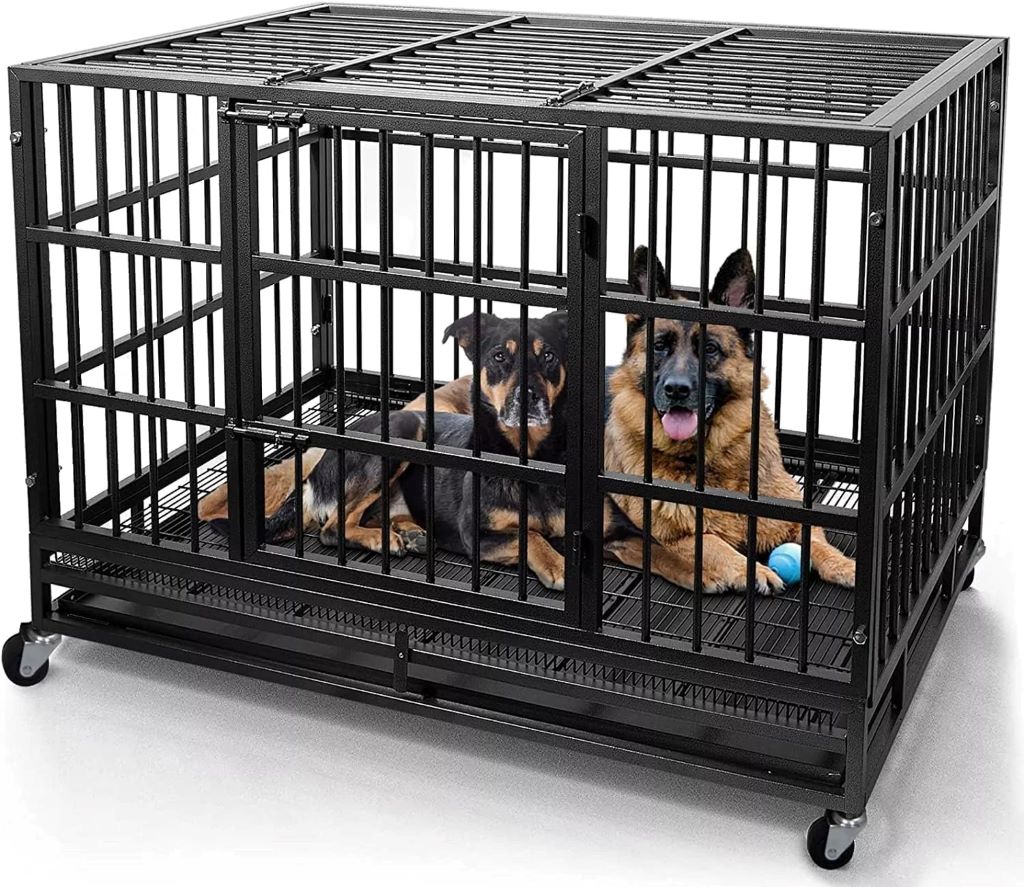
Durability is a top priority when choosing a heavy-duty dog crate for large breeds. Look for crates with thick, sturdy walls or bars that can withstand your dog’s strength and prevent escapes. Additionally, consider the crate’s resistance to chewing, scratching, and bending.
Security features are equally important. A secure latching mechanism is essential to prevent your dog from pushing or pulling the door open. Look for crates with multiple latches or locking systems for added security. Some heavy-duty crates even feature tamper-proof latches or padlock loops for extra peace of mind.
Additionally, consider the crate’s door design. Some crates feature a single door, while others have double doors for easier access and versatility. Double-door crates can be especially useful for large dogs, as they allow you to place the crate in different configurations within your home or vehicle.
Finally, think about the crate’s stability. A stable crate will prevent wobbling or tipping, providing a safer and more comfortable space for your dog. Look for crates with a wide, sturdy base or non-slip feet to prevent sliding or movement.
Portability and Storage
While heavy-duty crates are designed for strength and durability, portability and storage are also important considerations. If you plan to travel with your dog or move the crate frequently, look for a model that is easy to transport and store.
Collapsible wire crates are a popular choice for their portability. They can be easily folded down for compact storage and transport, making them ideal for road trips, camping, or visits to the vet. However, collapsible crates may not be as sturdy or secure as solid metal or reinforced plastic crates.
For non-collapsible crates, consider models with built-in handles or wheels for easier transport. Some heavy-duty crates even feature removable wheels or casters, allowing you to roll the crate from one location to another with ease.
Additionally, think about the crate’s weight. While heavy-duty crates are inherently heavier than standard crates, some models are lighter than others. Aluminum crates, for example, are often lighter than steel crates but still offer superior strength and durability.
Finally, consider the crate’s storage dimensions. If you have limited space in your home or vehicle, look for a crate that can be easily disassembled or folded down for compact storage.
Maintenance and Cleaning Tips
To ensure your heavy-duty dog crate lasts for years, regular maintenance and cleaning are essential. After each use, wipe down the crate with a damp cloth to remove dirt, debris, and pet hair. For a deeper clean, use a mild soap and water solution, especially for plastic or metal crates. Avoid using harsh chemicals or abrasives, as these can damage the crate’s surface or finish.
For fabric or padded components, such as crate mats or liners, follow the manufacturer’s cleaning instructions. Some components may be machine washable, while others may require spot cleaning or hand washing. Additionally, allow the crate to air dry completely before storing it to prevent mold or mildew buildup.
Regularly inspect the crate for signs of wear or damage, such as bent bars, broken latches, or chewed areas. Replace or repair any damaged parts to ensure the crate remains safe and secure for your dog.
Finally, store the crate in a cool, dry place when not in use. Avoid exposing it to direct sunlight or extreme temperatures, as these can cause the materials to degrade or warp over time. For metal crates, consider applying a rust-resistant coating or spray to prevent corrosion, especially if the crate is used outdoors or in humid climates.
Conclusion
Picking the right heavy-duty dog crate for your large dog doesn’t have to be overwhelming. By considering factors like material, size, durability, and portability, you can find a crate that meets your dog’s needs and provides a safe, comfortable space for rest, travel, or confinement.
I’ve tested countless heavy-duty crates over the years, and the right one has made a world of difference for Max and me. Whether we’re at home, on the road, or visiting the vet, his crate gives me peace of mind and keeps him secure and content.
Now it’s your turn. Use this guide to find the perfect heavy-duty crate for your large dog. If you have your own tips or favorite models, share them in the comments below. And if you found this guide helpful, don’t forget to share it with your fellow large dog owners!
FAQs
What is the best material for a heavy-duty dog crate?
The best material depends on your dog’s needs. Steel crates offer superior strength and durability, making them ideal for large, powerful dogs. Aluminum crates are lightweight yet strong, and rust-resistant. Reinforced plastic crates are lighter and more portable but may not be as sturdy as metal options.
How do I choose the right size heavy-duty dog crate for my large dog?
Measure your dog from the tip of their nose to the base of their tail, and add 4-6 inches to determine the minimum length of the crate. Additionally, measure your dog’s height from the floor to the top of their head or ears, whichever is taller, and add 4-6 inches to determine the minimum height of the crate.
Can I use a heavy-duty dog crate for air travel?
It depends on the airline’s regulations and the size of the crate. Some airlines allow large, sturdy crates for checked baggage, while others may have specific requirements for in-cabin use. Always check with your airline before traveling to ensure your crate meets their guidelines.
How do I clean and maintain my heavy-duty dog crate?
Wipe down the crate with a damp cloth after each use to remove dirt and debris. For a deeper clean, use a mild soap and water solution for plastic or metal crates. Regularly inspect the crate for signs of wear or damage, and store it in a cool, dry place when not in use. For metal crates, consider applying a rust-resistant coating to prevent corrosion.
Are heavy-duty dog crates safe for long car trips?
Yes, but ensure the crate is securely fastened to your vehicle’s seatbelt system or anchored in place to prevent sliding or tipping during sudden stops or turns. Additionally, choose a crate with proper ventilation and a comfortable, cushioned floor to keep your dog safe and comfortable during long trips.